
Short answer: it's not just cosmetic, and waiting makes it worse
If one of you thinks that rust speck or puffy panel is purely an eyesore and the other thinks it's a sign of real trouble, the second person is right. Rust and swelling on a garage door are early warning signs that moisture is getting into places it shouldn't — seams, fasteners, the bottom edge of panels, or the layer between a steel door's skin and its insulation. Left alone, small spots turn into soft, crumbly sections, sticking tracks, or a door that no longer closes flush. None of that fixes itself, and none of it gets cheaper to fix later.
Why this happens so much here
Garage doors in this part of Florida deal with a rougher combination than most: hot, humid air most of the year, afternoon downpours that can blow rain sideways into the garage opening, and salt-laden air if you're anywhere near the coast. Add hurricane-season humidity swings and you get the two main culprits working at once — water finding its way in, and temperature/humidity shifts causing materials to expand and contract. Steel doors rust where paint is chipped or where water sits against metal. Wood or wood-composite doors swell when they soak up moisture, then shrink again as they dry, which eventually warps panels and loosens joints.
What's normal vs. what's a real problem
- Normal: A faint haze of surface rust on exposed hardware (hinges, rollers, track bolts) that wipes off with light abrasion and hasn't spread to the door panel itself.
- Worth watching: Small rust bubbles under the paint on a steel panel, especially near the bottom few inches where rain splashes and water pools after storms.
- Real problem: Panels that look wavy or bowed, seams that have separated, a door that drags or binds in the track, or rust that flakes off in chunks rather than wiping away.
- Real problem: Wood panels that feel soft when pressed, have darkened edges, or no longer sit flush against the frame.
What actually causes the moisture to get in
Usually it's one of a handful of entry points, not a mystery leak:
- Worn or missing weatherstripping along the bottom and sides, letting wind-driven rain blow underneath during storms
- Chipped paint or scratched coating on steel panels, which exposes bare metal to humidity
- Clogged or missing drainage at the base of the door track, so water sits instead of running off
- Panels or hardware that were never rated for coastal wind-load conditions, which can flex more than they should during storms and crack protective coatings
What to do about it now
- Inspect the bottom panel and weatherstripping first. This is where most water gets in. If the seal is cracked, brittle, or pulling away, it needs replacing before it causes hidden damage.
- Wipe down and touch up small rust spots. Light surface rust on hardware can be cleaned with a wire brush and treated with a rust-inhibiting primer plus matching paint, which buys real time.
- Don't paint over swelling or active rust bubbles. That traps moisture underneath and hides how bad it's gotten — it looks fixed for a few months, then fails faster.
- Check that nothing is binding in the track. A door that's swollen even slightly can start rubbing, which strains the opener and the springs.
- Plan touch-up and sealing work for drier stretches. As hurricane season winds down into late fall, lower humidity and less frequent downpours make it a better window for repainting or resealing than the peak of summer storms.
When to call Elfers Garage Door Repair
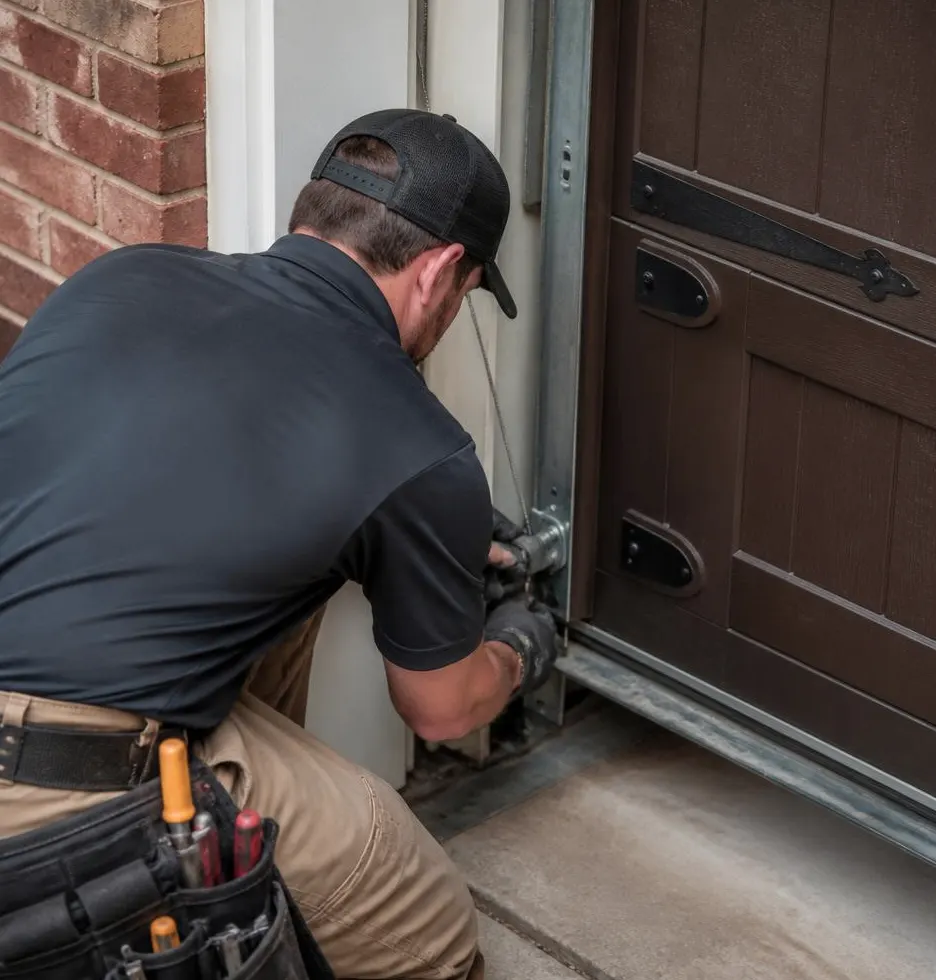
Call us when rust has spread past the surface, a panel feels soft or looks warped, or the door is sticking in the track — those usually mean more than a touch-up job. We handle Garage Door Panel Replacement when a section is too far gone to save, and Garage Door Tune-Up & Maintenance to catch weatherstripping, drainage, and hardware issues before they turn into bigger repairs. If you're already noticing the door drag or bind, that's also worth a look before it strains the opener or springs.
If you and your spouse are still debating it, send us a photo or give us a call — we serve Elfers, Holiday, Tarpon Springs, New Port Richey, Port Richey, Trinity, Palm Harbor, and Hudson, and we can tell you in minutes whether it's a quick fix or something more.