
The Mistake Most Homeowners Make Before a Storm
Storm prep usually goes in this order: board the windows, strap down the patio furniture, grab batteries and water, check the generator. The garage door gets skipped, or at best a quick glance. It's an easy mistake to make, because the door looks like the strongest part of the house — heavy steel, thick panels, a motor bolted to the ceiling. It feels built to take a beating.
But a garage door isn't engineered to resist wind the way a wall is. It's engineered to roll up and down smoothly while supporting its own weight. Those are two very different jobs, and in a high-wind event, the difference matters more than almost anything else on the house.
Why the Garage Door Is a Home's Weakest Wall
Think about the size of the opening. A garage door is often the single largest unsupported span in the entire structure — bigger than any window, bigger than most exterior walls before framing. When wind hits a solid wall, the load spreads across studs, sheathing, and fasteners that have been resisting lateral force for decades. When wind hits a garage door, that same force concentrates on tracks, rollers, hinges, and a few mounting brackets.
If the door buckles or blows in, the problem doesn't stop at the garage. Wind-driven rain and pressure now have a direct path into the house. Air that used to be blocked suddenly pushes up against the underside of the roof deck from the inside, which is a common way roofs fail in hurricane-force wind. This is exactly why wind-load rules for garage doors exist in storm-prone parts of Florida — the door isn't just a door, it's load-bearing for the whole envelope of the house.
Signs Your Current Door Won't Hold
- Tracks that are bent, bowed, or pulling away from the wall
- Panels that look warped or slightly bulged, often from humidity swelling the material over time
- Rollers or hinges showing heavy rust, especially in homes closer to the coast where salt air speeds up corrosion
- Weatherstripping at the bottom that's cracked, flattened, or no longer sealing tight
- An opener with no manual lock function or battery backup
A Pre-Storm Checklist Worth Doing Every Season
- Inspect tracks and rollers for rust. Salt-laden air corrodes hardware faster here than in drier climates, and rusted rollers can seize or snap under added wind stress.
- Tighten every bolt and bracket. Vibration from wind and daily use loosens hardware gradually; a quick tightening pass before storm season closes gaps that wind can exploit.
- Test the manual release and backup battery. Power outages are routine during storms. Know how to operate the door by hand, and make sure a battery backup opener actually holds a charge.
- Replace worn bottom seals. Afternoon downpours and humidity swell wood and composite panels; a failing seal lets water and wind pressure sneak underneath.
- Clear gutters and drainage near the garage. Standing water at the threshold during heavy rain adds pressure and speeds up rust on the bottom track.
Reinforcement Options: Bracing Kits vs. Wind-Rated Doors
If the current door isn't rated for wind load, there are two practical paths. A bracing kit adds horizontal supports across the inside of the existing door — a lower-cost option, but it has to be installed before the storm arrives, which means it's only useful if you act early, not during a warning. A wind-rated replacement door comes with reinforced struts built in permanently, so there's nothing to install last-minute, but it's a bigger upfront investment. Either option beats hoping an older door holds.
After the Storm
Once the weather clears, check for a door that's come off its tracks, cables that look frayed or loose, and panels that are dented or no longer sitting flush. These are common after high-wind events even when the door didn't fail completely, and running a door on a damaged track risks a much bigger breakdown later.
When to Call Elfers Garage Door Repair
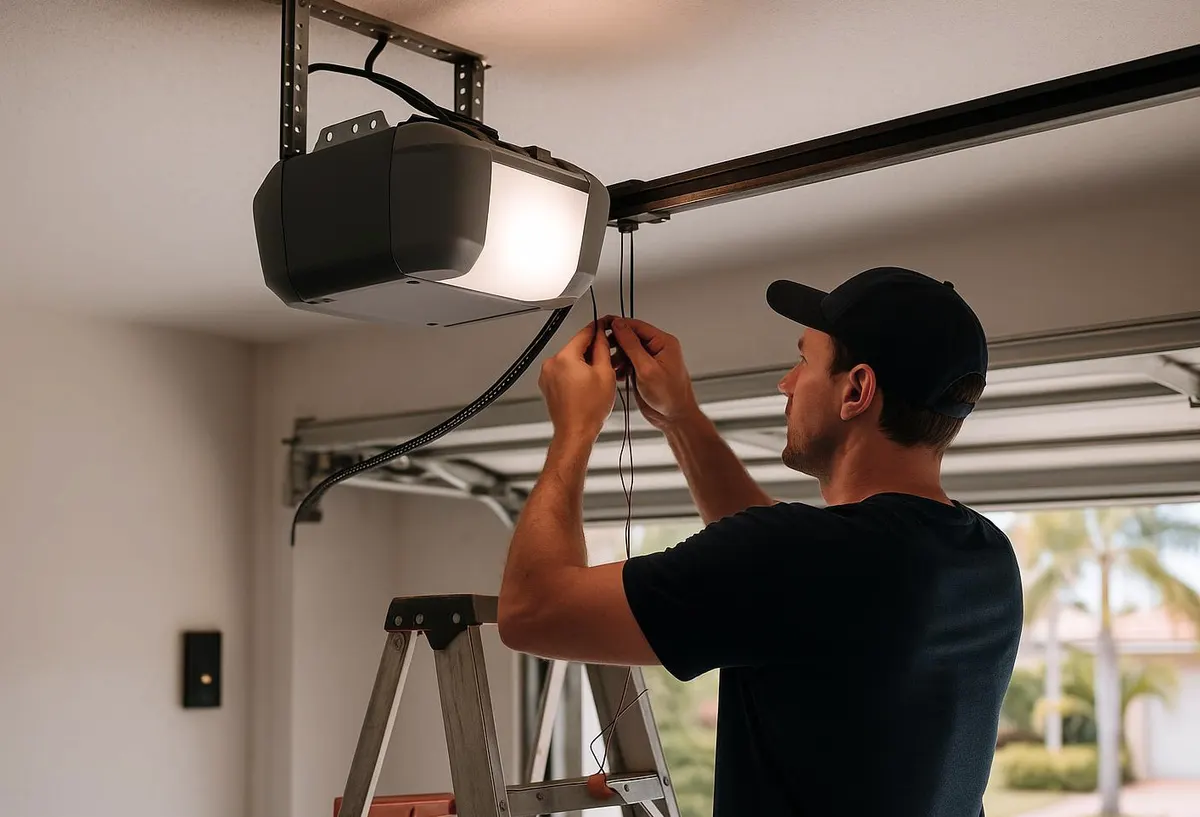
If your door is off track, the tracks are bent, or the opener isn't responding the way it should after a storm, that's a job for Off Track Door Repair. If it's been a while since anyone's looked at the springs, cables, rollers, and hardware, a Garage Door Tune-Up & Maintenance visit before storm season catches the small problems — rust, loose bolts, worn seals — before wind turns them into expensive ones.
If you're in Elfers, Holiday, Tarpon Springs, New Port Richey, Port Richey, Trinity, Palm Harbor, or Hudson and want your garage door checked before the next storm rolls through, call Elfers Garage Door Repair today.